Israeli Settler Violence and Systemic Impunity in Masafer Yatta (2010-2025)
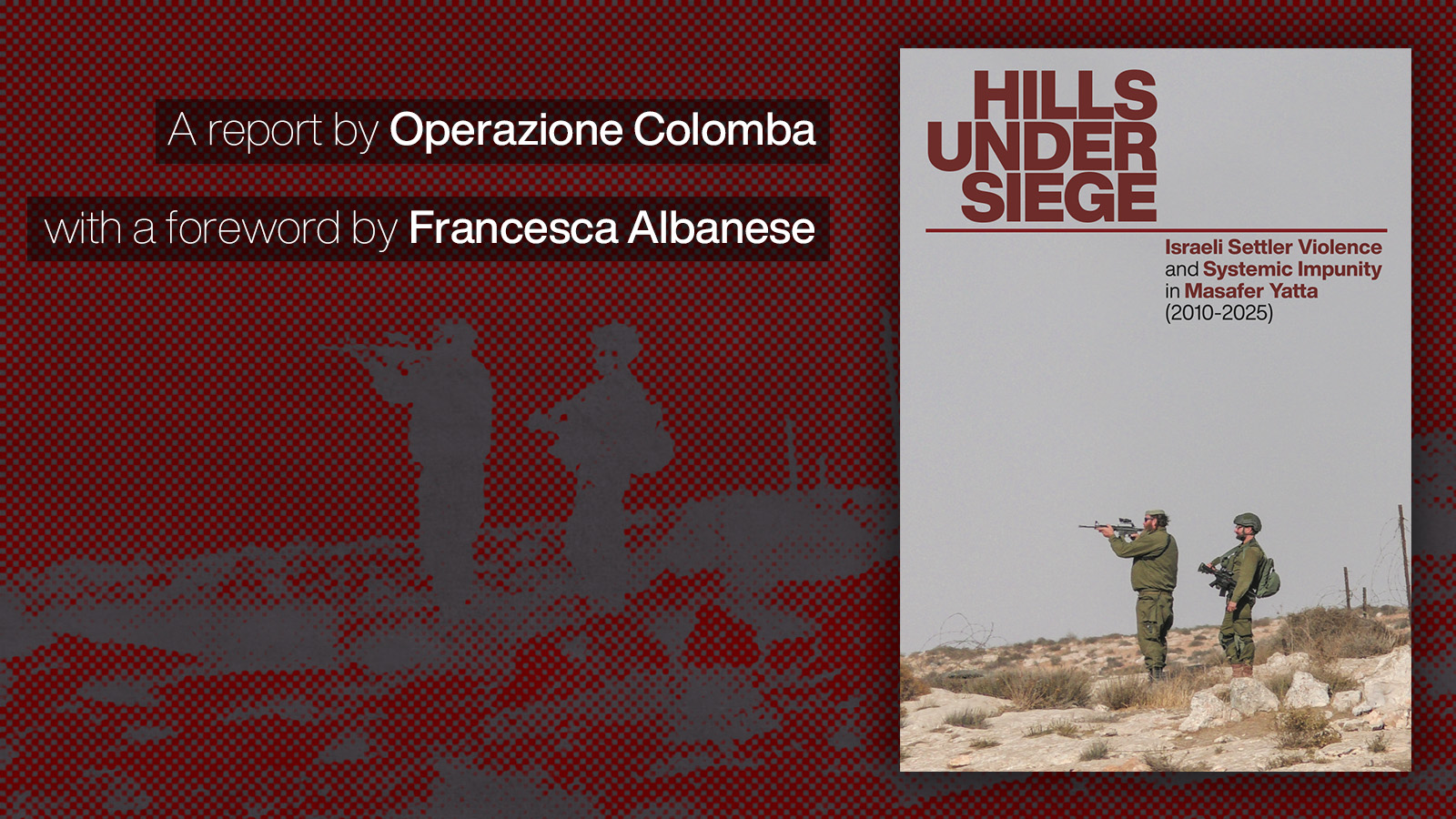
Drawing on 15 years of field presence and documentation, this report by Operazione Colomba (Operation Dove) examines the escalating violence carried out by Israeli settlers against Palestinian communities in Masafer Yatta, in the South Hebron Hills.
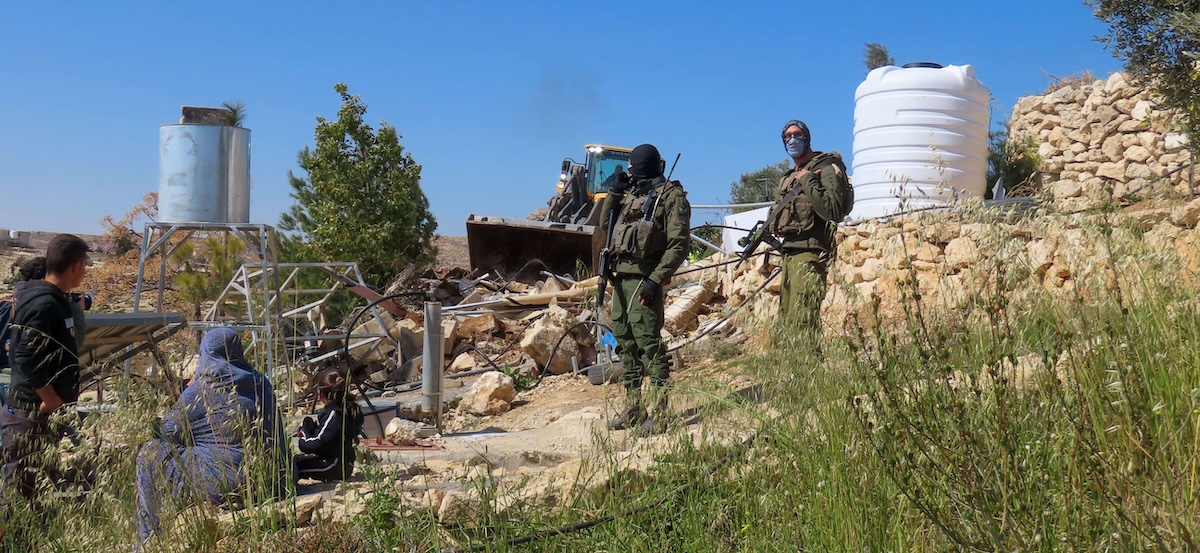
Through first-hand testimonies, photographs, videos, and systematic data collection, it exposes patterns of harassment, assault, destruction, and dispossession, as well as the persistent impunity enjoyed by those responsible. The report also examines how settler violence, institutional support, and the absence of accountability contribute to the forced displacement of Palestinian communities in Area C of the West Bank.
With a foreword by Francesca Albanese, Special Rapporteur on the situation of human rights in the Palestinian territories occupied since 1967.
Israeli Settler Violence and Systemic Impunity in Masafer Yatta (2010-2025)
A report by Operazione Colomba with a foreword by Francesca Albanese
A Data-Driven Analysis of Systematic Dispossession in the Palestinian South Hebron Hills
Over 15 years, Operazione Colomba activists have documented 2,558 incidents of settler violence against Palestinians in Masafer Yatta. This is not random conflict — it's a deliberate, escalating system of harassment, assault, and property destruction designed to displace communities and seize land.
Where Is This Happening?
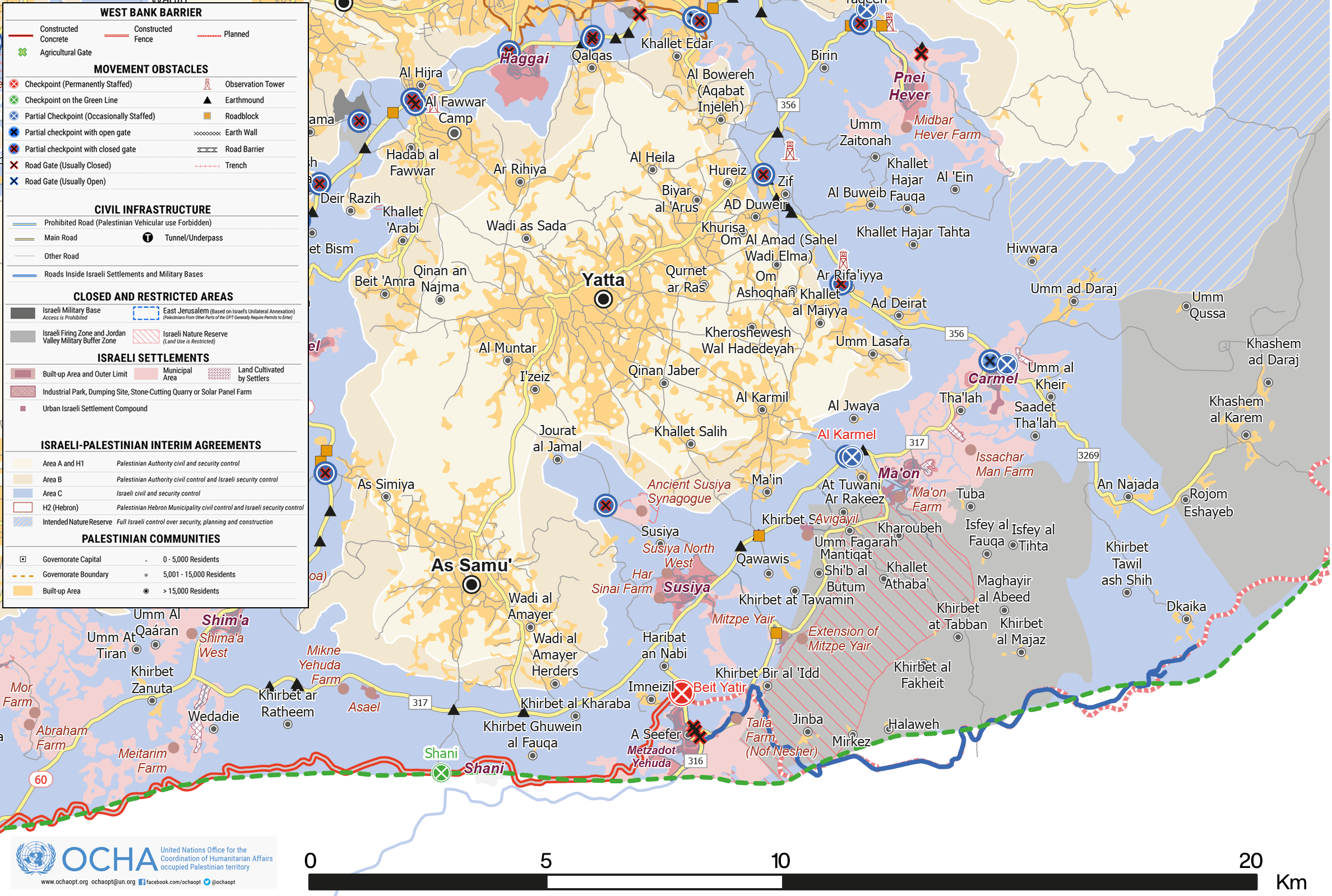
Masafer Yatta, in the South Hebron Hills of the West Bank
The perpetrators primarily come from nearby Israeli settlements:
Ma'on
Susyia
Avigayil
Carmel
Outposts: Havat Ma'on, Mitzpe Yair, and Mitzpe Eshtamoa
However, this pattern is not unique to Masafer Yatta. The report's findings provide a clear snapshot of broader dynamics across Area C of the West Bank, where similar patterns of settler colonialism are documented.
The Numbers Tell the Story
Violence Type
Total Cases (2010–2025)
Annual Average
2025 Recorded
What It Means
Harassment
1,691
~113 per year
160
Near-daily disruption of Palestinian life
Physical Aggression
335
~22 per year
23
Overt violence: hitting, weapons, assaults
Property/Livestock Damage
532
~35 per year
100
Destroyed homes, poisoned wells, stolen animals
TOTAL
2,558
~170 per year
283
One incident every ~2 days
This means Palestinians in Masafer Yatta face settler violence approximately every two days.
2025: Violence Is Escalating to New Levels
The 2025 data reveal a critical shift: settler violence is not only continuing but consolidating at significantly higher levels.
Category
2010–2024 Average
2025 Actual
Change
Harassment
113 cases/year
160 cases
+42%
Property/Animal Damage
35 cases/year
100 cases
+186%
Physical Aggression
22 cases/year
23 cases
Increase in intensity
The Violence Is Becoming More Lethal
While the number of aggression incidents appears relatively stable, the severity and lethality have escalated dramatically. The raw count masks a dangerous reality:
Sheikh Said al-Amoor was shot by a settler and lost his leg as a result
Awdah Hathaleen was killed by Israeli settler Yinon Levi in the village of Umm al-Khair
Even where frequency hasn't risen dramatically, the harm inflicted has become deadly.
This Is a Sustained Pattern, Not a Temporary Spike
The 2023–2025 period marks an unprecedented three-year sequence of high-level violence unmatched in the previous decade:
Before 2023: Violence fluctuated within a stable, lower band (typically well below 180–190 incidents annually)
2023–2025: Sustained levels of 180+ incidents per year, forming a clear break from historical patterns
The escalation after October 2023 has not receded—it has consolidated into a new baseline.
How We Collected This Data
Our methodology is rigorous and verifiable:
Direct documentation: Operazione Colomba volunteers witness incidents in real-time while accompanying Palestinian shepherds or responding to emergencies
Audiovisual evidence: Every incident is supported by photographs and videos taken at the moment it occurs
Standardized recording: Each incident is logged in a "serious log" database with consistent categorization (harassment, aggression, property damage)
Data cleaning & verification: Annual cross-checking ensures accuracy and internal consistency
2020–2022 exception: During COVID-19 restrictions, data was collected indirectly through Palestinian and Israeli human rights defenders, then harmonized to match Operazione Colomba's standards
Important limitation: This dataset captures only incidents witnessed by volunteers. The actual number of incidents is likely significantly higher —particularly during years with fewer volunteers on the ground or when international observers were absent.
Why the Violence Surged After 2023
Three major factors converge to explain the escalation:
1. Post-COVID Emboldening Following the absence of international observers during 2020–2022, settlers escalated activity with increased confidence, recognizing reduced international monitoring.
2. October 7, 2023 & the Gaza War The genocide in Gaza coincided with and accelerated ethnic cleansing policies in the West Bank, creating a broader climate of impunity.
3. Far-Right Israeli Government The appointment of Itamar Ben-Gvir and Bezalel Smotrich to key ministerial positions normalized settler ideology within the state apparatus, creating institutional support for settler violence.
Settler-Soldiers: A Militia Armed and Sanctioned by the State
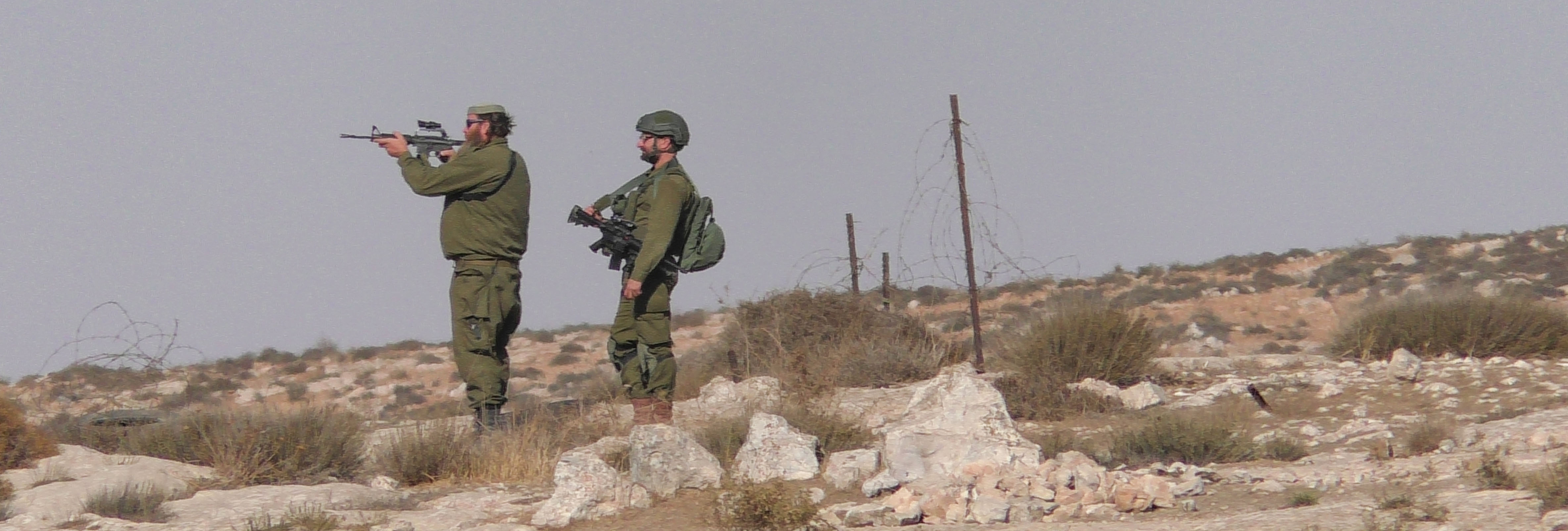
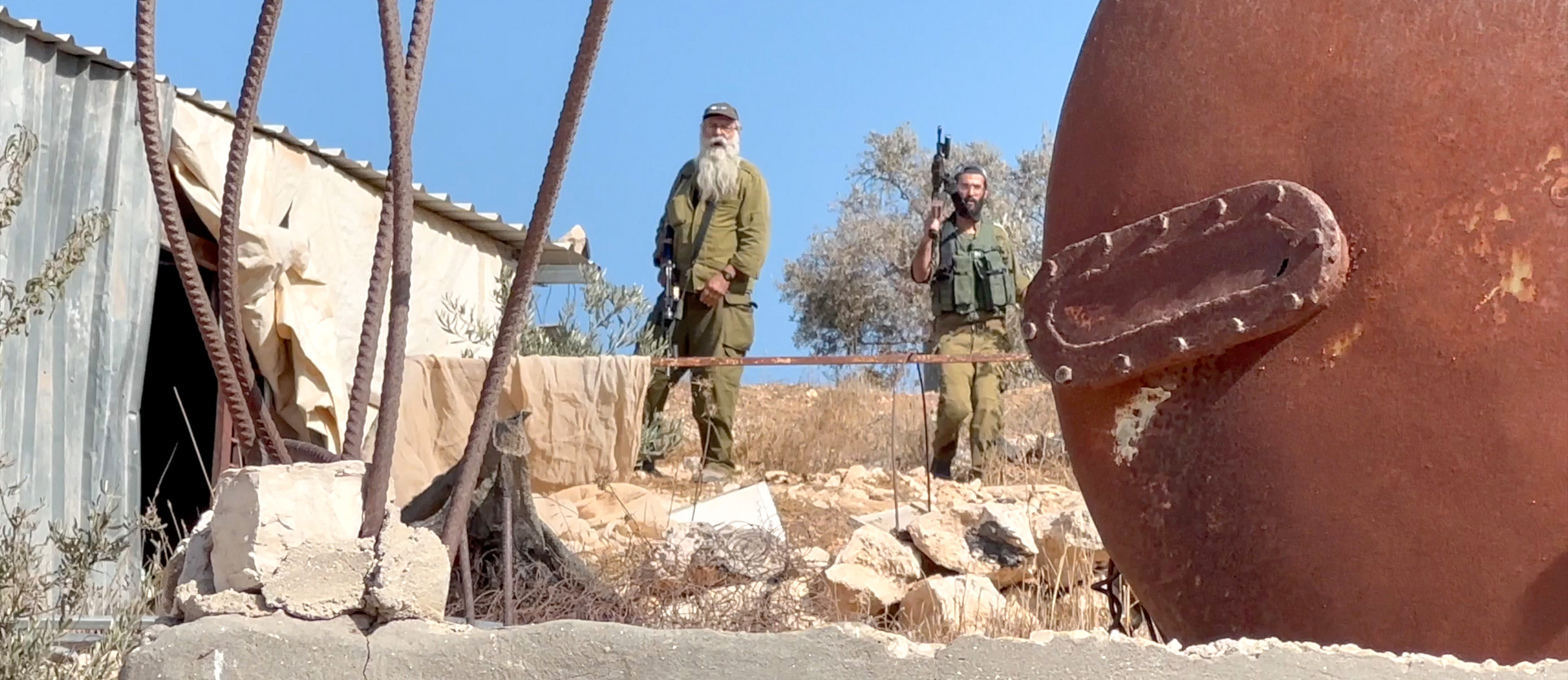
A critical shift occurred after October 2023: settlers enlisted as Israeli army reservists and were armed by the state.
When regular soldiers deployed to Gaza, the West Bank came under the control of civilian settlers operating as a de facto militia, equipped with rifles and official army status granted by Ben-Gvir's Ministry of National Security.
How This Changed the Dynamics
Settlers gained military authority while retaining their settler interests in land acquisition
Perceived impunity increased dramatically; settlers now operate with state backing
Violence became more severe, including documented shootings and permanent injuries
The state effectively outsourced ethnic cleansing to armed settler units
Additionally, settlement emergency teams (kitat konenut in Hebrew)— quasi-military forces of trained, IDF-equipped settlement residents—are now organized and appointed by the settlements themselves, blurring the line between civilian and military action.
This is not settlers acting independently, it is settlers operating with explicit state sanction.
Types of Violence Documented
Harassment (1,691 cases | 160 in 2025)
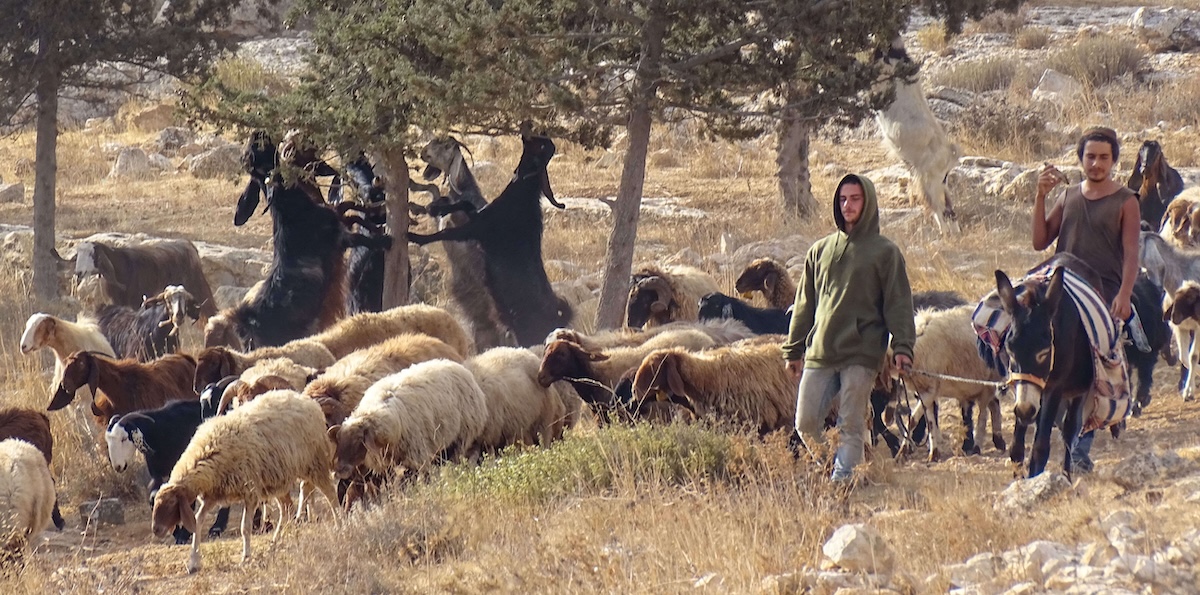
The most frequent form of violence. Settlers use their presence, often armed, to prevent Palestinians from accessing grazing lands, agricultural fields, and water sources. A shepherd may be forced to abandon grazing and leave the area simply due to a settler's implicit threat of violence.
This is a daily tactic of intimidation and control.
Physical Aggression (335 cases | 23 in 2025)
Overt violence involving hitting, shoving, pushing, and weapons including:
Since 2023, severity has increased, including permanent injuries and deaths.
Property & Livestock Damage (532 cases | 100 in 2025)
Systematic destruction of Palestinian livelihoods:
Theft or poisoning of animals
Uprooting or cutting of olive trees
Poisoning of wells and destruction of water infrastructure
Removal of protective fencing
Vandalism of vehicles and homes
These acts target survival itself: food, water, shelter.
Who Are the Settlers?
The settlers in Masafer Yatta are primarily ideological extremists who believe in the establishment of a Jewish nation encompassing all of historical Palestine and beyond ("Greater Israel"), accessible exclusively to Jewish people.
Demographics
Predominantly Israeli citizens, often holding dual nationality or originating from countries such as the USA, Russia, and South Africa
Mixed ages: While adults perpetrate the most severe attacks, settler minors (under 18) are increasingly implicated
The Alarming Role of Settler Minors
Settler children participate in all forms of violence: harassment, aggression, and property damage. What's concerning is that this appears to be a deliberate tactic.
In recent years, there's been a marked increase in the presence of underage settlers. Minors are often:
Sent to shepherd (occupying Palestinian land)
Frequently armed
Typically the ones harassing Palestinians
Face minimal legal consequences if caught
Why Target Children as Perpetrators?
The Israeli legal system offers minors far more lenient treatment than adults:
Israeli Youth Law protections for minors (under 18):
Detention as a last resort
Protection of dignity and age consideration
Focus on rehabilitation and reintegration
Right to express opinions in judicial proceedings
Age-appropriate explanations of court decisions
Result: Minor settlers face minimal consequences for violence.
The Stark Double Standard
Category
Israeli Settler Minors
Palestinian Minors in Military Courts
Conviction Rate
40%
94%
Completion of Sentence
20% only
N/A
Legal Protections
7 explicit provisions
Zero
Court Type
Civil court
Military court
Palestinian minors have a 94% conviction rate and face military courts with no age-related protections, while Israeli settler minors receive youth law protections and civil court proceedings.
The Pattern of Impunity
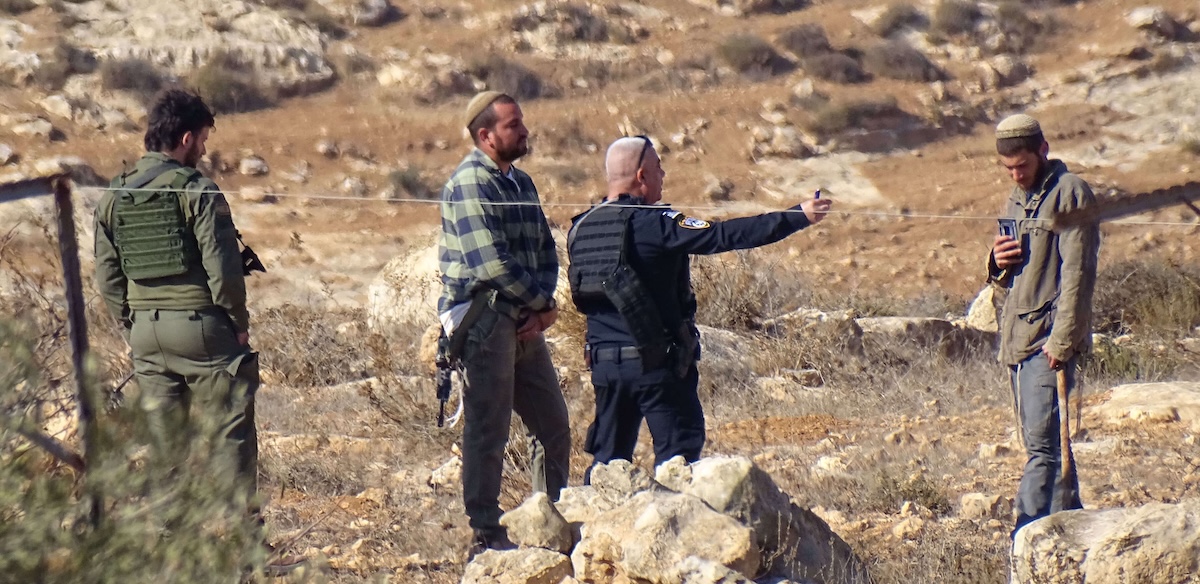
One of the most damaging findings: settlers face near-total absence of consequences for their violence, even when military or police forces are present.
In 2025, only 4 recorded cases resulted in any consequences for settlers, all involving harassment, none involving aggression or property damage.
This mirrors the 2010–2024 pattern: accountability remains rare and inconsistent, regardless of whether Israeli authorities are present during the incident.
This creates a vicious cycle:
Settlers commit violence
Authorities fail to intervene or prosecute
Settlers become more emboldened
Violence escalates
What This Violence Serves
This is not random conflict. It is systematic dispossession, a coordinated effort to:
Control territory: Force Palestinians off their land through daily intimidation
Restrict livelihoods: Destroy agricultural infrastructure and livestock to make survival impossible
Enable settlement expansion: Create conditions for new settler outposts and expansion of existing settlements
Displace communities: Make Palestinian presence untenable, facilitating eventual removal
This reflects what scholars call settler colonialism, distinct from traditional colonialism because settlers don't just extract resources; they seize land, displace indigenous populations, and claim it as their own homeland.
Why This Matters
The systematic violence documented in Masafer Yatta is not an anomaly, it is a preview of state policy in Area C of the West Bank, where Israeli settlers and occupation forces operate to displace Palestinian communities and expand territory.
The consolidation of settler-soldiers, the weaponization of minors, and the systematic absence of accountability combine to create a system of state-sanctioned ethnic cleansing. Understanding this pattern is essential for comprehending the broader dynamics of Israeli settler colonialism and the ongoing dispossession of Palestinian people.
The 2025 data confirms that this violence is not declining, it is consolidating into a new, higher baseline of systematic violence and territorial conquest.
REPORT The military escort along the dangerous route to school for the children of Tuba and Maghayir Al Abeed, South Hebron Hills 2011-2012 and 2012-2013 School Years


 OPERAZIONE COLOMBA


